The Bus, 1929 by Frida Kahlo
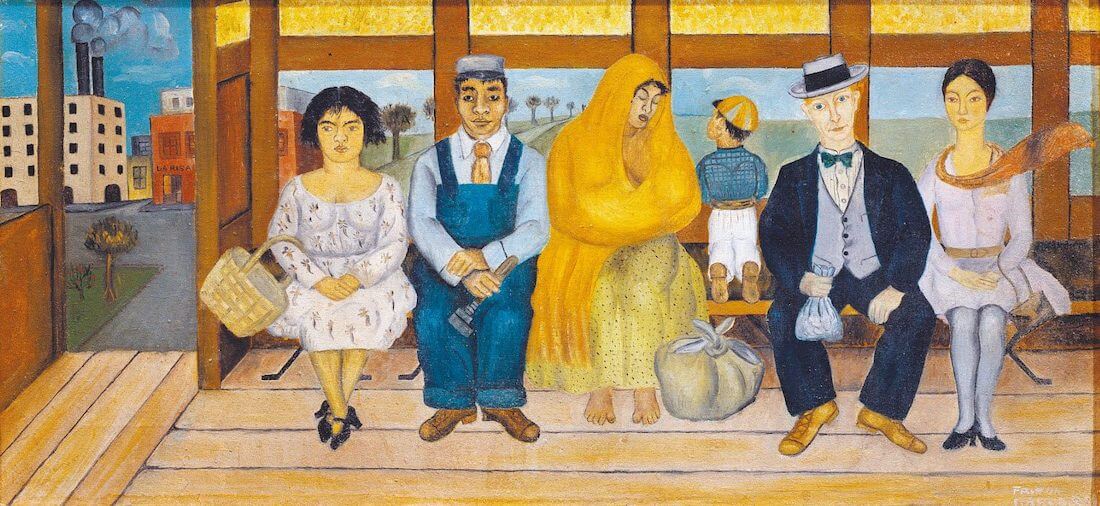
This painting, The Bus, clearly shows Diego Rivera's influence on Frida Kahlo's political attitudes. In this painting, a few people are sitting side by side on a wooden bench of a rickety bus. They are representatives of different classes of Mexican society. From left to right, there are a housewife holding her shopping basket, a blue-collar guy in his work overall, a barefoot Indian mother who is feeding her baby, a little boy looking around, a businessman holding his money bag and a young girl which might be Frida herself. In this painting, Frida demonstrated her sympathy for the dispossessed. She painted the Indian mother as Madonna-like and the blue-eyed gringo is a representation for the capitalists.
This painting is also a depiction of the bus accident which happened in 1925 and changed her life forever. Frida Kahlo once said:
I suffered two grave accidents in my life. One in which a streetcar knocked me down. . . . The other accident is Diego."
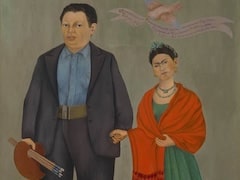
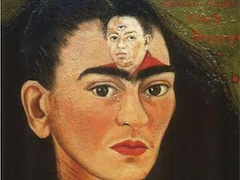
Diego and Frida's union was both carnal and comradely. The most powerful bond between the two is their admiration for each other's art. Diego is the greatest artist to her and she called him the "architect of life." To Diego, Frida was "a diamond in the midst of many inferior jewels" and "the best painter of her epoch."
Diego's encouragement and critics of her art were essential to Frida Kahlo, and part of her impetus to paint came from her desire to please him. She was, he said, a better artist than he, and he loved to tell of Pablo Picasso's reaction to Frida's work. "Look at those eyes," Picasso is said to have written to Rivera, "neither you nor I are capable of anything like it."